
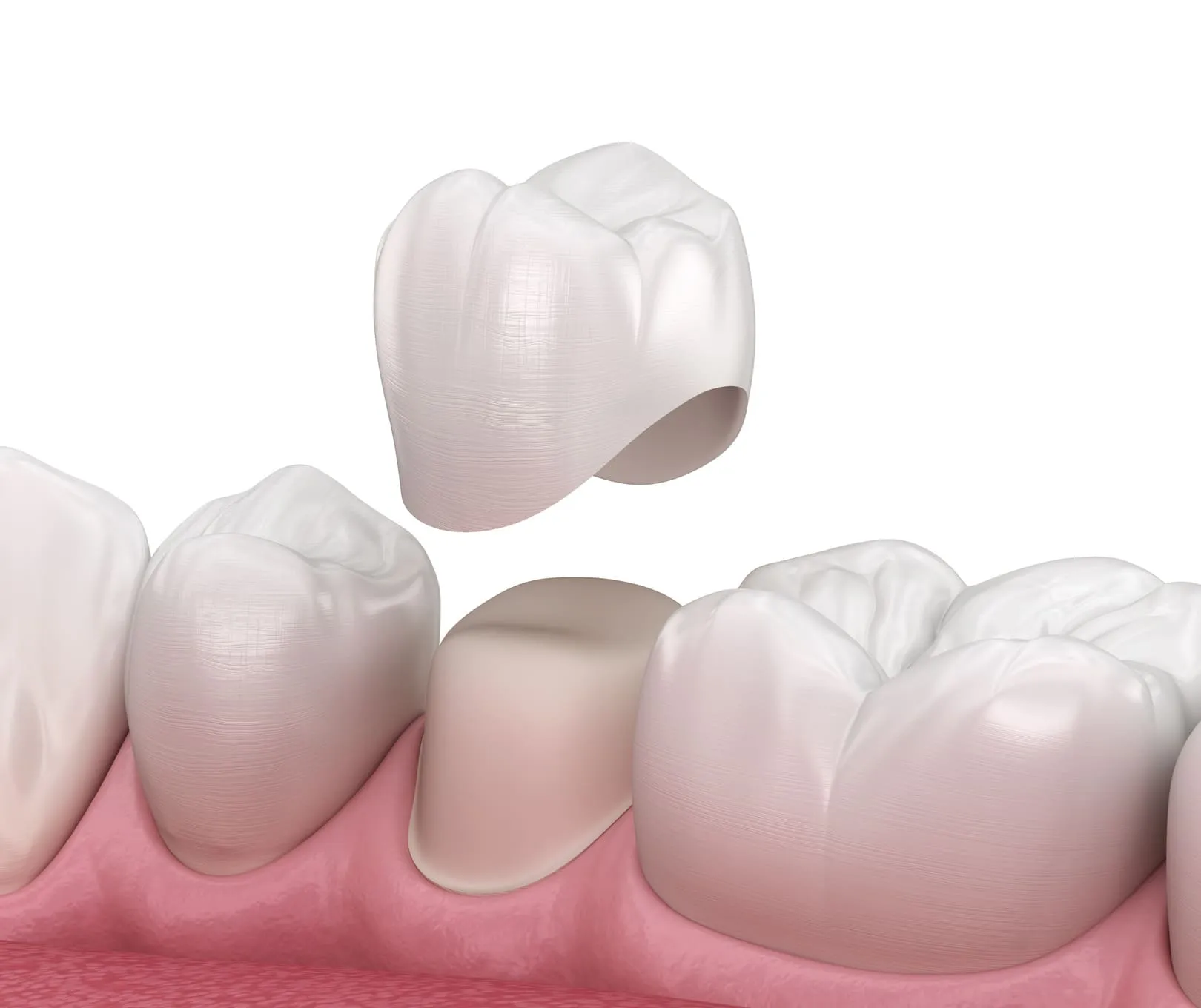
Custom Crowns That Restore Strength, Fit, and Appearance
When a tooth is too damaged for a filling but still has a healthy root, a dental crown is often the best way to save it. A crown is a custom-made cap that fits over the entire visible portion of the tooth, reinforcing its structure and restoring a natural look and bite.
At Peach Dental, Dr. Jordan Reznik designs and places crowns using digital scanning technology and 3D printing — which means more precise fits, fewer adjustments, and the option for same-day crowns in many cases. Our office in Dunwoody serves patients throughout Sandy Springs, Brookhaven, and the greater Atlanta area.
When a Dental Crown Is the Right Solution
Crowns aren't just for severely broken teeth. They're one of the most versatile restorations in dentistry, used across a wide range of situations:
- After a root canal — root canal therapy saves the tooth's root, but the remaining structure is weakened and needs full coverage to prevent fracture
- Large cavities that a filling can't support — when more than half of the tooth's chewing surface is compromised, a filling alone won't hold long-term
- Cracked or fractured teeth — a crown holds the pieces together and seals out bacteria before the crack worsens
- Worn-down teeth — from grinding, acid erosion, or age-related wear that has shortened or weakened the tooth
- On top of a dental implant — the crown is the visible, functional tooth that attaches to the implant post
- As an anchor for a dental bridge — crowns on the teeth adjacent to a gap hold the bridge in place
- Cosmetic improvement — for teeth that are severely discolored, misshapen, or undersized and can't be corrected with veneers alone
Types of Dental Crowns We Offer
The right crown material depends on which tooth is being restored, how much biting force it needs to handle, and how visible it is when you smile. Dr. Reznik discusses the options with every patient so you can make an informed choice.
- Porcelain and ceramic crowns are the most natural-looking option and work well for front teeth and other visible areas. They're color-matched to blend seamlessly with your surrounding teeth.
- Zirconia crowns combine the appearance of ceramic with significantly greater strength. They're a strong choice for both front and back teeth, especially for patients who grind.
- Porcelain-fused-to-metal (PFM) crowns offer a metal core for durability with a porcelain exterior for aesthetics. They've been a reliable standard for decades.
- Same-day crowns — using 3D CT imaging and in-house 3D printing, we can design and fabricate certain crowns in a single appointment, eliminating the need for a temporary crown and a second visit.
How the Crown Process Works
Most crown treatments take one or two visits depending on the type of crown and the complexity of your case.
1. Evaluation and Imaging Dr. Reznik examines the tooth and takes digital scans to assess the damage and plan the restoration. For more complex cases — like crowns placed over implants or teeth with suspected fractures below the gumline — advanced imaging gives us a complete picture before any preparation begins.
2. Tooth Preparation The tooth is carefully reshaped to create space for the crown. We remove just enough structure for the crown to fit over the tooth without changing your bite or feeling bulky. This step is done under local anesthesia, and we offer nitrous oxide for patients who want additional relaxation.
3. Impression and Design A digital impression captures the exact shape of the prepared tooth and the surrounding teeth. This data is used to design a crown that fits precisely — no goopy impression trays needed.
4. Crown Fabrication For same-day crowns, the restoration is milled or printed in our office while you wait. For lab-fabricated crowns (common with PFM or highly customized esthetics), a temporary crown protects the tooth until your permanent one is ready, typically within two weeks.
5. Placement and Adjustment The final crown is bonded to the tooth and checked for fit, bite alignment, and color match. Most patients can eat and function normally the same day.
Caring for a Dental Crown
A crown doesn't need special maintenance, but it does need the same care as your natural teeth. Brushing twice daily, flossing around the crown margin, and keeping up with regular dental cleanings will help the crown — and the tooth underneath — last as long as possible.
Patients who grind their teeth at night should consider a custom nightguard to protect both crowns and natural teeth from excessive wear.
Frequently Asked Questions About Dental Crowns
How long do dental crowns last?
Most crowns last 10–15 years, and many last significantly longer with good oral hygiene and regular checkups. Zirconia and PFM crowns tend to be the most durable for back teeth that take heavy chewing force. The biggest threats to crown longevity are gum disease around the base of the tooth and nighttime grinding — both of which are manageable with proper care.
Does getting a crown hurt?
No. The tooth is numbed with local anesthesia before any preparation begins, so you won't feel the work being done. If you experience dental anxiety, we also offer sedation options ranging from nitrous to IV sedation for more involved procedures.
What's the difference between a crown and a veneer?
A veneer covers only the front surface of a tooth and is primarily cosmetic. A crown wraps around the entire tooth and restores both appearance and structural strength. If the tooth is significantly damaged or weakened, a crown is usually the better choice. If the tooth is structurally sound but cosmetically flawed, a veneer may be enough.
Can I get a crown in one visit?
In many cases, yes. Our in-house 3D printing and digital design workflow allows us to fabricate certain crown types the same day. Dr. Reznik will let you know during your evaluation whether a same-day crown is appropriate for your situation.
Is a crown better than a large filling?
Generally, yes — when the damage exceeds what a filling can reliably support. A filling relies on the surrounding tooth structure to hold it in place. When too much of that structure is gone, the filling can crack, leak, or cause the remaining tooth to fracture. A crown protects the entire tooth from the outside, distributing biting force evenly.
Are dental crowns covered by insurance?
Most dental insurance plans cover crowns when they're deemed medically necessary — typically after significant decay, fracture, or root canal therapy. Coverage percentages vary by plan. We can verify your benefits before treatment begins, and we offer financing through Cherry for patients who prefer to spread the cost into monthly payments.
What happens if I don't get a crown when one is recommended?
A weakened tooth that isn't protected will continue to deteriorate. Cracks can deepen, decay can spread, and the tooth may eventually break to the point where it can't be saved — requiring an extraction and replacement with an implant or bridge instead. Getting a crown early is almost always less costly and less invasive than waiting.
Schedule a Dental Crown Consultation in Atlanta
If you have a damaged, weakened, or worn tooth, a custom crown can restore its strength and appearance for years to come. Peach Dental serves patients throughout Dunwoody, Sandy Springs, Brookhaven, and the greater Atlanta area.
Call (404) 625-3009 or visit our Contact Page to request an appointment.
Want to schedule an appointment?